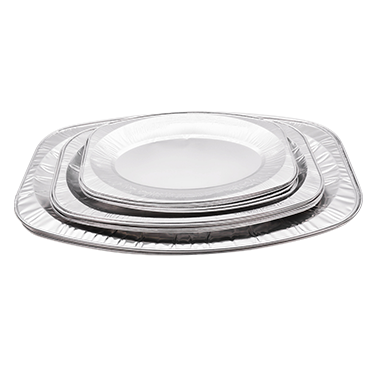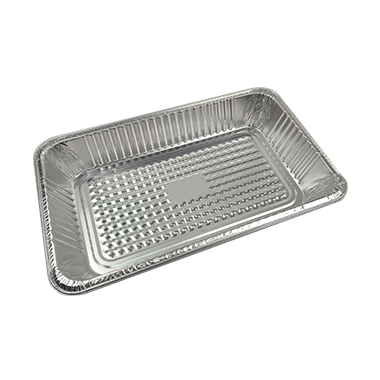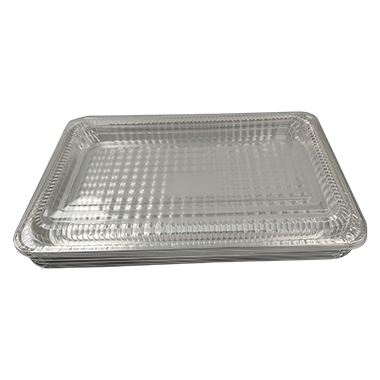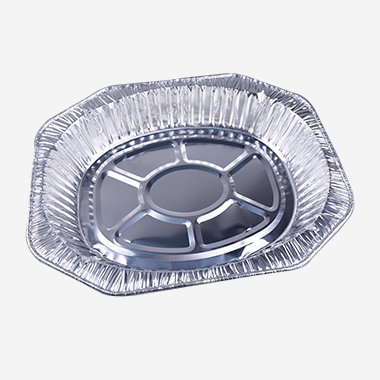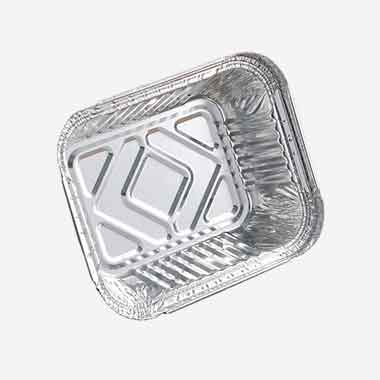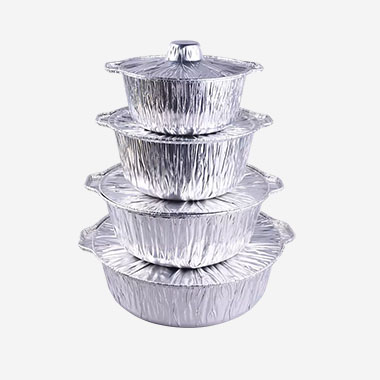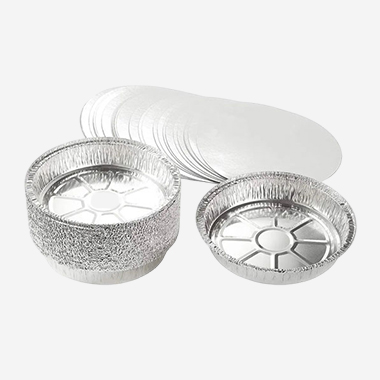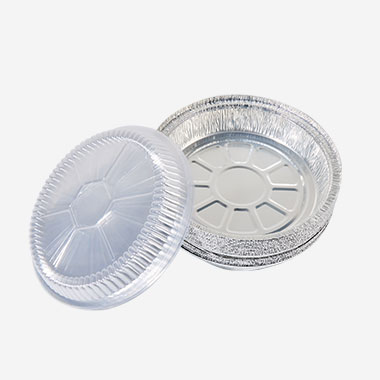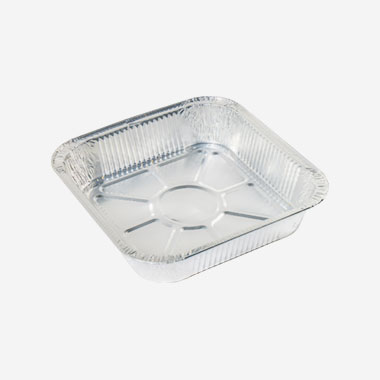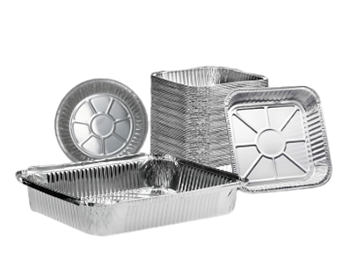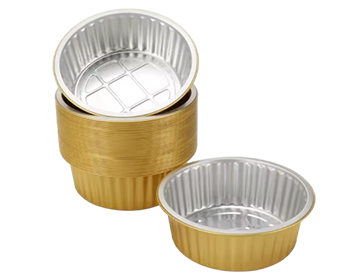
Aluminum foil container sizes vary considerably from one market to another. While some markets use manufacturer-specific model numbers such as 8342, 8389, C10 or No.2, others rely more heavily on foodservice formats such as half size and full size pans.
These differences are influenced by local food portions, takeaway habits, food types, established packaging formats, lid availability and distributor preferences. The same model number may also have slightly different dimensions or capacities between manufacturers.
The information below provides a practical reference for importers, wholesalers, food packaging distributors and foodservice buyers. Dimensions and capacities should always be confirmed with the supplier before placing a bulk order.
| Sales Market | Commonly Referenced Formats | Typical Capacity Range | Common Applications |
|---|---|---|---|
| UK | No.1, No.2, No.6, No.6A, No.9 | 260-930 ml | Takeaway meals, curry, rice, Chinese and Indian food |
| Chile | C5, C10, C18, C20 | 260-800 ml | Prepared meals, pasta, lasagna, meat, fish, and food delivery |
| USA | Full Size, Half Size | Varies by depth | Catering, foodservice, buffets, takeout and batch cooking |
The UK has a well-established system of numbered aluminum foil takeaway containers. No.1, No.2, No.6 and No.6A are commonly offered by UK food packaging suppliers, alongside larger formats used for catering and sharing portions.
| Model | Example Dimensions | Typical Use |
|---|---|---|
| No.1 | 130×100×42 mm | Small portions, sides and starters |
| No.2 | 150×120×50mm | Individual takeaway portions, rice, curry and similar dishes |
| No.6 | 216×115×55mm | Larger takeaway meals and foodservice applications |
| No.6A | 205×110× 55 mm | Larger rectangular takeaway meals |
| No.9(Round) | 232 ×47 mm | Larger portions and catering applications |
For example, UK suppliers list No.2 containers around 145–147 mm long and 120–122 mm wide, while a No.6A format is commonly around 200 mm long. Some suppliers specify a No.2 capacity of approximately 350 ml, while other manufacturers offer different depths and capacities under similar model names.
The UK market therefore demonstrates an important point: a model number should be treated as a market reference rather than a universal technical specification.
The numbered system has become familiar throughout the takeaway and foodservice supply chain. Packaging suppliers commonly position these formats according to portion size and application, from smaller individual portions to larger meals and catering trays.
Food types such as Chinese, Indian and Thai takeaway meals are frequently associated with these standard foil container formats.
For wholesale buyers, it is therefore useful to confirm the exact dimensions, depth and compatible lid rather than ordering only by the model number.
Chile provides a good example of a market where manufacturer and distributor model numbers such as C5, C10, C18 and C20 are widely used in food packaging sales.
Current Chilean supplier listings show the following commonly referenced formats:
| Chile Model | Example Dimensions | Approx. Capacity |
|---|---|---|
| C5 | 130×100×42 mm | 260 ml |
| C10 | 150×120×50mm | 450 ml |
| C18 | 185×135×50mm | 700 ml |
| C20 | 210×140×42mm | 800 ml |
Other Chilean packaging distributors also list C10, C15, C18, C20, C25 and C30 formats, demonstrating that the exact product range can differ between suppliers.
These containers are commonly marketed for prepared meals, delivery, lasagna, pasta, meat, fish, oven preparation and food storage.
The Chilean market illustrates how a group of model numbers can become a practical purchasing language within a local distribution network.
For an importer, however, the model name alone is not enough. C10 from one supplier should not automatically be assumed to have exactly the same dimensions or capacity as C10 from another supplier.
The US foodservice market uses a somewhat different naming system. Instead of relying mainly on manufacturer-specific numbers, many aluminum foil pans are identified by established foodservice formats such as:
Full Size
Half Size
Third Size
Quarter Size
Depth is also important, with shallow, medium and deep versions available for the same footprint.
| Model | Approx. Size | Approx. Capacity |
|---|---|---|
| Full Size(SMD) | 525×328× 42/50/76 mm | 5360/6700/9700 ml |
| Half Size(SMD) | 320×265× 40/50/60 mm | 2400/3000/3500 ml |
| 7 Inch Pan | 185×45mm | 720 ml |
| 8 Inch Pan | 215×45mm | 880 ml |
| 9 Inch Pan | 232×47mm | 930 ml |
The depth can substantially change the capacity while keeping the same basic footprint. For example, full-size and half-size pans are available in shallow, medium and deep versions.
This is an important difference from markets where buyers may simply ask for a model such as 8389 or C10.
These formats are closely associated with commercial foodservice, catering and steam-table applications. A full-size pan is designed for large-volume food preparation and service, while a half-size pan can be used for smaller batches or multiple dishes within a full-size foodservice space.
For US buyers, it is therefore important to specify both the footprint and depth, rather than discussing capacity alone.
The Middle East and Africa also has strong demand for standardized aluminum foil food containers, but the market includes both manufacturer-specific model numbers and application-based formats.
Models such as 8342, 8389, 8367, 83120 and 83185 appear in regional supplier catalogs and online food packaging stores.
| Model | Example Capacity | Example Dimensions | Typical Role |
|---|---|---|---|
| 8325 | 260 ml | 130×100×42 mm | Small portions of rice |
| 8342 | 450 ml | 150×120×50mm | Smaller individual meals |
| 8367 | 670 ml | 205×110× 55 mm | Medium-size meals |
| 8389 | 800 ml | 210×140×42mm | Main meals and larger takeaway portions |
| 83120 | 1000 ml | 230×180×43mm | Larger meals and catering |
| 83185 | 1750ml | 255×190×60mm | Large portions of meat |
| 8567(3 Compartment) | 780ml | 230×180×40mm | Serve rice, vegetables, and fried chicken separately. |
Due to linguistic and historical factors, the African region shares many popular, standardized models; however, Distribution channels, local food portions, import sources, and supplier inventories can differ between countries. Each country also needs to be studied country by country.
For example, Ghanaian import records include shipments identified as 8342 and 8389 from China. Tanzania trade records also show 8342 and 8389 entering the market from the United Arab Emirates.
Regional suppliers in the UAE and Saudi Arabia currently list 8342 and 8389, while broader regional catalogs also include 83120, 83185, and 8367.
Customers in Somalia favor the 8389 model, with many frequently purchasing full 40HQ containers of it.
One important purchasing consideration is that the same model number can have different dimensions depending on the manufacturer.
For example, different suppliers list 8389 with dimensions ranging from approximately 209 × 138 mm to 212 × 150 mm, with depths also varying between products.
Therefore, buyers should use the model number as a starting reference and confirm the physical specification before placing a large order.
There is no single global standard for disposable aluminum foil takeaway containers.
Market preferences are shaped by several factors:
A market with larger typical takeaway meals may require larger-capacity containers, while smaller individual portions may support smaller formats.
The length and width of the container can be just as important as its capacity. Long foods, rice-based meals, mixed dishes and bakery products may require different proportions even when their volume is similar.
The growth of takeaway and food delivery can increase demand for containers that provide secure lids, good stacking performance and suitable dimensions for delivery bags.
A container is normally purchased as part of a packaging system. Matching paper, plastic, foil or other lids can influence which container format distributors choose to stock.
Once a particular model becomes widely available through wholesalers and packaging distributors, restaurants may continue using it because replacement stock and compatible lids are easy to source.
Carton quantity, carton dimensions, container weight and shipping efficiency also affect which models are practical for importers and distributors.
When sourcing aluminum foil containers for a particular market, buyers should not rely on the model number alone.
Instead, compare the following specifications:
A sample is also recommended when purchasing a new model or changing suppliers.
Model numbers such as No.2, C10, 8342 or 8389 are useful market references, but they should not automatically be treated as universal technical standards.
Different manufacturers may produce containers with the same model number but slightly different dimensions, depths, capacities, weights or lid designs.
For bulk purchasing, importers and distributors should therefore confirm the actual product specifications before placing an order.
Eming supplies aluminum foil containers for wholesalers, importers, distributors and food packaging buyers. Standard sizes are available for different foodservice applications, while customized dimensions and mold development can also be discussed for specific market requirements.
If you already use a particular model number in your market, you can send the model number, dimensions, capacity, photo or sample specification. This makes it easier to identify the closest available model and confirm the appropriate container and lid combination.