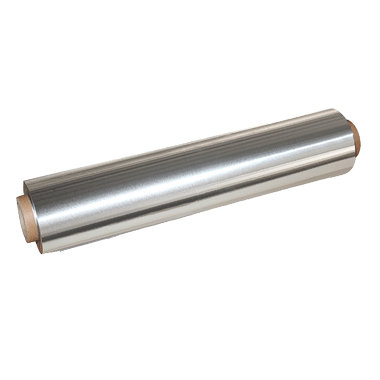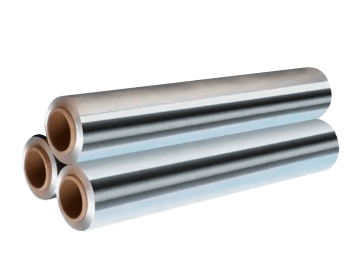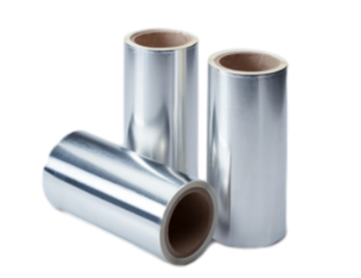
Two aluminum foil rolls can have the same width and the same weight, but contain very different amounts of foil.
For example, a 30 cm aluminum foil roll weighing 3 kg can have a significantly different length depending on whether the foil is 9, 12, or 15 microns thick.
This is important when comparing supplier quotations. A lower price per roll does not necessarily mean a lower cost for the amount of foil you actually receive.
For importers, wholesalers, supermarket suppliers, and foodservice distributors, the key specifications to compare are thickness, width, net aluminum weight, roll length, and packaging weight.
The relationship between thickness and roll length is straightforward:
For the same width and net aluminum weight:
Thinner foil provides more meters per roll.
Thicker foil provides fewer meters per roll.
Wider foil provides fewer meters for the same weight and thickness.
Consider a simple example using a 30 cm wide roll with 3 kg of net aluminum.
| Thickness | Approx. Length* |
|---|---|
| 9 micron | 411 m |
| 12 micron | 309 m |
| 15 micron | 274 m |
| 20 micron | 183 m |
*Theoretical values calculated using an aluminum density of approximately 2.7 g/cm³. Actual production specifications may vary because of thickness tolerance, weight tolerance, and other manufacturing factors.
The difference becomes significant at commercial quantities.
A 3 kg roll at 9 micron can contain more than 400 meters of foil, while a 3 kg roll at 12 micron contains roughly 309 meters under the same width and net-weight conditions.
Therefore, simply asking for a “3 kg roll” is not enough when comparing suppliers.
One of the most common sources of confusion in aluminum foil purchasing is the difference between net weight and gross weight.
A roll may include:
Aluminum foil
Paper core
Plastic wrapping
Labels
Carton packaging
The net weight refers to the aluminum foil itself.
The gross weight includes the foil and the associated core and packaging materials.
This distinction becomes particularly important when a buyer requests a specification such as: 30 cm × 3 kg aluminum foil roll
Before comparing quotations, the buyer should clarify:
Does 3 kg mean net aluminum weight or gross roll weight?
If two suppliers both quote “3 kg per roll,” but one supplier includes a heavier core or packaging in that figure, the actual aluminum content may be different.
For B2B purchasing, net aluminum weight should therefore be clearly specified.
Price per roll is easy to compare, but it is not always the most useful measurement.
Imagine two suppliers offer the following:
| Specification | Supplier A | Supplier B |
|---|---|---|
| Width | 30 cm | 30 cm |
| Thickness | 9 micron | 12 micron |
| Net foil weight | 3 kg | 3 kg |
| Roll price | Lower | Higher |
| Approx. length | Longer | Shorter |
If you only compare the price per roll, Supplier A may appear more attractive.
But the real question is:
How much usable foil are you receiving for the quoted price?
For applications where roll length is important, buyers can also compare the cost per meter.
The basic calculation is:
Cost per meter = Roll price ÷ Actual roll length
For example, if a roll costs $6 and contains 300 meters:
$6 ÷ 300 m = $0.02/m
This provides a more meaningful comparison when two quotations have different roll lengths.
However, cost per meter should not be used alone. A thinner foil may provide more meters but may not meet the required strength or application requirements.
The correct comparison should therefore consider:
Price + Thickness + Width + Net Weight + Roll Length + Application Requirements
Thickness is not the only factor affecting roll length.
Width also has a direct effect.
For example, a 1 kg roll of 30 cm wide, 9 micron foil contains approximately 137 meters under theoretical calculation, while the same weight of 45 cm wide foil contains approximately 91 meters.
This is why a quotation such as: 1 kg aluminum foil roll
is incomplete without the width and thickness.
A professional specification should look more like:
300 mm × 137 m × 9 micron or 300 mm × 1 kg × 9 micron
depending on how the product is sold in the target market.
There is no single thickness suitable for every aluminum foil application.
For household and foodservice foil rolls, common commercial specifications may include approximately 9–25 microns, depending on the application and market.
Typical considerations include:
| Thickness Range | General Consideration |
|---|---|
| 9–10 micron | Lightweight household applications and longer roll lengths |
| 11–13 micron | Balance between flexibility, strength, and material usage |
| 14–18 micron | Greater strength and durability |
| 20–25 micron | Heavy-duty applications requiring higher strength |
These ranges are only general references. The actual specification should be confirmed according to the product's intended use and the requirements of the target market.
For example, a supermarket private-label product may prioritize consumer-friendly roll length and retail price, while a catering or foodservice product may place greater emphasis on strength and handling performance.
Before requesting or comparing an aluminum foil quotation, B2B buyers should confirm the following information.
Specify the required thickness in microns, such as 9, 12, 15, or 18 micron.
If a tolerance is important, specify the acceptable thickness tolerance as well.
Specify the exact roll width in millimeters or centimeters.
For example:
300 mm
450 mm
600 mm
If your market sells foil by length, specify the required meters per roll.
Clarify whether the quoted weight refers only to the aluminum foil.
Ask for the gross weight when shipping and carton loading calculations are important.
Confirm the core diameter, width, and approximate core weight.
Confirm whether the product uses standard packaging or customized private-label packaging.
For branded products, also clarify:
Inner box design
Printed carton
Roll label
Logo requirements
Rolls per carton
Having these specifications confirmed before production can significantly reduce misunderstandings between buyers and suppliers.
Instead of sending a request such as: Please quote 3 kg aluminum foil rolls.
A more complete inquiry would be: Aluminum foil roll, 300 mm width, 9 micron thickness, 3 kg net aluminum weight, customized retail packaging, 500 cartons.
This gives the manufacturer enough information to calculate the product configuration and prepare a more accurate quotation.
If the buyer does not know the appropriate roll length or weight, the supplier can also recommend a specification based on the target market and application.
For importers, wholesalers, supermarket suppliers, and private-label brands, aluminum foil rolls can be customized according to the requirements of the target market.
Common customization options include:
Foil thickness
Roll width
Roll length
Net weight per roll
Paper core
Inner box
Carton packaging
Private-label printing
Logo and brand information
At Zhengzhou Eming Aluminium Industry Co., Ltd., aluminum foil rolls can be supplied in different thicknesses and customized dimensions for wholesale and OEM projects.
Our standard aluminum foil thickness range covers approximately 9–25 micron, with customized widths, roll lengths, and packaging available according to project requirements.
For buyers who use weight-based specifications, length-based specifications, or both, the product configuration can be discussed according to the requirements of the target market.
Not necessarily on a price-per-roll basis. A thicker foil uses more aluminum material per square meter, but the final quotation also depends on roll length, width, packaging, order quantity, and other specifications. Buyers should compare complete product specifications rather than thickness alone.
If width and net aluminum weight remain the same, yes. Thicker foil uses more aluminum per meter, so the same net weight will generally produce a shorter roll.
For comparing the actual amount of aluminum received, net foil weight is more meaningful. Gross weight is still important for logistics and shipping calculations because it includes the core and packaging.
First confirm that the specifications are comparable. Check thickness, width, net weight, roll length, core, packaging, and quantity. When appropriate, calculate the price per meter or another relevant unit instead of comparing only the price per roll.
Yes. Roll length can be customized according to the required thickness, width, net weight, packaging format, and target market. Buyers should confirm the complete specification with the manufacturer before production.
At minimum, provide the required thickness, width, roll length or net weight, packaging requirements, and order quantity. For private-label projects, also provide the required box design, logo, and other packaging specifications.
Aluminum foil roll purchasing is not simply a matter of finding the lowest price per roll.
Thickness affects material consumption. Material consumption affects roll length and weight. Width also changes the amount of foil contained in a roll. Meanwhile, the difference between net and gross weight can affect how buyers compare quotations.
For B2B buyers, the most reliable approach is to compare thickness, width, net weight, roll length, packaging, and price together.
When these specifications are clearly defined, buyers can make more accurate supplier comparisons, avoid misunderstandings, and develop aluminum foil products that better match the requirements of their target market.