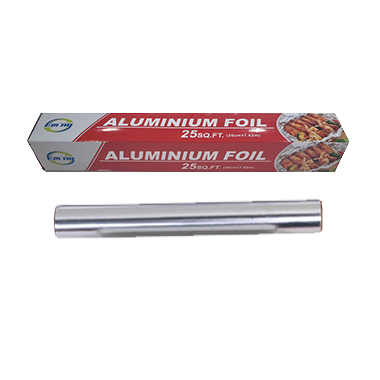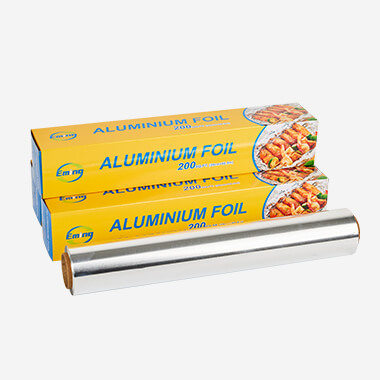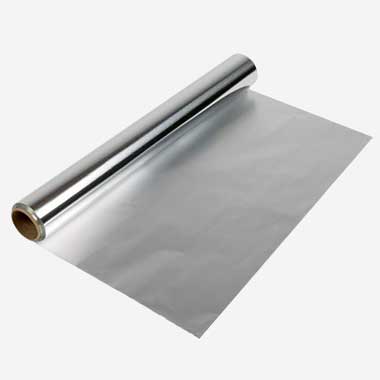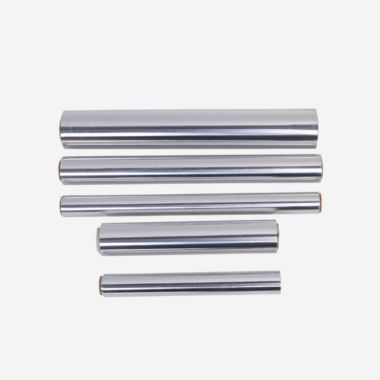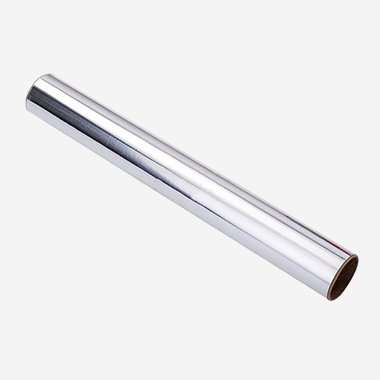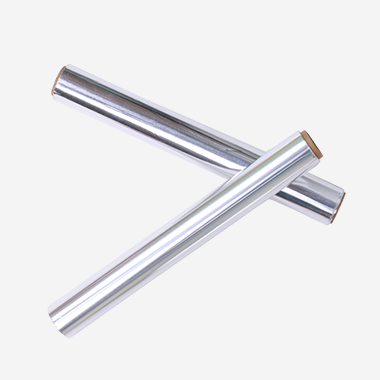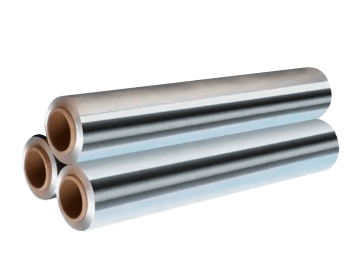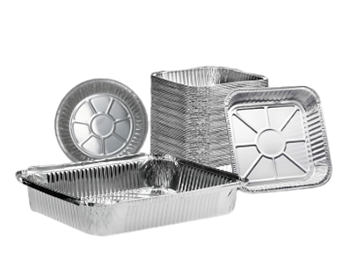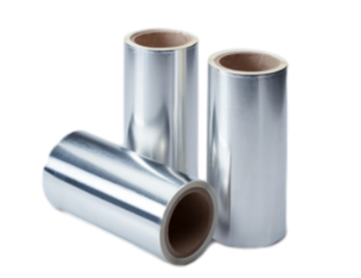
Heavy duty aluminum foil is widely used in food packaging, catering, BBQ, and commercial kitchen applications where higher strength and durability are required.
In the aluminum foil industry, heavy duty foil is primarily classified according to thickness, and it is generally thicker than standard household aluminum foil.
Compared with regular foil products, heavy duty aluminum foil offers better resistance to tearing and puncturing, making it more suitable for demanding cooking and packaging environments.
As global demand for takeaway food, outdoor cooking, and food service packaging continues to grow, heavy duty foil rolls are becoming increasingly popular in many international markets.
In commercial practice, heavy duty aluminum foil usually refers to aluminum foil rolls with a thickness ranging from 18 to 25 microns.
Standard household foil is commonly produced between 9 and 16 microns, while thicker foil products are marketed as heavy duty foil because of their improved durability and performance.
The enhanced strength of heavy duty foil mainly comes from its increased thickness.
Thicker foil is less likely to tear during wrapping, cooking, or transportation, especially when used for heavy food, grilled meat, or high-temperature applications.
Heavy duty foil is commonly produced using food-grade aluminum alloy such as 8011 alloy, which provides good flexibility, hygiene performance, and heat resistance for food contact applications.
Although heavy duty aluminum foil is mainly defined by thickness, this increased thickness directly improves several important performance characteristics.
Heavy duty foil is more resistant to punctures and tearing compared with regular household foil.
This is especially important when wrapping sharp-edged food such as ribs, seafood, or roasted meat.
Thicker aluminum foil performs more reliably during grilling, baking, and roasting.
It is less likely to burn through or deform under high cooking temperatures, making it suitable for BBQ and commercial kitchen use.
Heavy duty foil has better rigidity and structural stability during use.
It maintains shape more effectively during food wrapping, takeaway packaging, and catering operations, which helps improve operational efficiency in food service environments.
Heavy duty aluminum foil rolls are widely used across food-related industries and retail markets.
One of the most common applications is outdoor BBQ and grilling.
Thick foil helps retain moisture and withstand direct heat exposure during cooking.
Many catering companies and takeaway businesses prefer thicker foil because it reduces the risk of leakage or tearing during transportation.
Restaurants, hotels, and commercial kitchens often use heavy duty foil rolls for baking trays, oven cooking, and food storage.
In many supermarkets, heavy duty foil is sold as a premium household product designed for consumers who require stronger kitchen foil for daily cooking.
Different applications may require different foil thicknesses depending on cooking conditions and packaging requirements.
| Application | Recommended Thickness |
|---|---|
| Standard household use | 9–16 micron |
| BBQ and grilling | 18–20 micron |
| Catering and takeaway | 20–25 micron |
| Commercial kitchen use | 18–25 micron |
Heavy duty foil rolls can be customized according to different market demands and retail packaging requirements.
| Thickness | Width | Length | Common Application |
|---|---|---|---|
| 18 micron | 30 cm | 5 m | Retail household |
| 20 micron | 45 cm | 75 ft | BBQ use |
| 25 micron | 45 cm | 150 ft | Catering service |
Manufacturers can also customize box printing, core size, packaging style, and roll length based on customer requirements.
Different regions may have different preferences for heavy duty aluminum foil products.
The North American market has strong demand for heavy duty foil used in BBQ, grilling, and outdoor cooking applications.
Australian buyers often prefer thicker household foil with attractive retail packaging and strong carton protection for supermarkets.
Large-size catering foil rolls are commonly used in hotels, restaurants, and the foodservice industry across Middle Eastern markets.
European customers usually pay closer attention to food-grade certification, sustainability, and packaging compliance.
For importers and distributors, product consistency is extremely important when sourcing heavy duty aluminum foil rolls.
Buyers should pay attention to the following points:
Working with an experienced aluminum foil manufacturer can help reduce quality risks and improve supply stability for long-term cooperation.
The global demand for heavy duty aluminum foil continues to increase due to several market trends.
The rapid growth of takeaway food services, meal preparation businesses, BBQ culture, and commercial kitchens has increased demand for stronger and more reliable aluminum foil products.
At the same time, many wholesalers and retailers are expanding their premium kitchen foil product lines to meet consumer demand for higher-quality cooking materials.
As a result, heavy duty aluminum foil rolls are becoming an important category in both retail and food service packaging markets.
Is 18 micron aluminum foil considered heavy duty?
Yes. In many markets, aluminum foil starting from 18 microns is commonly classified as heavy duty foil.
What is the thickest household aluminum foil roll?
Most household heavy duty aluminum foil rolls are typically produced up to 25 microns.
Is heavy duty foil better for BBQ?
Yes. Thicker foil performs better under high temperatures and is less likely to tear during grilling and wrapping.
Can heavy duty aluminum foil be used in ovens?
Yes. Heavy duty aluminum foil is widely used for oven cooking, baking, and roasting applications.
Can heavy duty foil rolls be customized?
Yes. Manufacturers can customize thickness, width, length, packaging, printing, and OEM branding according to customer requirements.