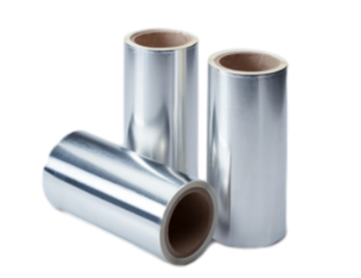
Choosing a reliable aluminum foil container manufacturer requires more than comparing prices. Importers, wholesalers, and distributors should evaluate material quality, food-contact compliance, product specifications, customization capability, minimum order quantity, quality control, packaging, and export experience before placing a bulk order. A manufacturer that can consistently meet these requirements can help buyers reduce quality risks and maintain a stable supply.
For most B2B buyers, the right manufacturer should be able to provide consistent product quality, suitable specifications, reliable production capacity, and the documentation required for the target market. The following factors are worth checking before making a supplier decision.
The aluminum foil used for food containers should be suitable for the intended food-contact application. Buyers should ask the manufacturer what alloy and material specifications are used and whether supporting documentation is available.
Common aluminum alloys used for food packaging applications include 8011, 3003, and other suitable grades depending on the container design and forming requirements. The appropriate material should be selected according to the container's shape, depth, strength requirements, and intended use rather than simply choosing the lowest-cost option.
A reliable manufacturer should be able to explain its material specifications and provide relevant material or compliance documentation when required.
Food-contact compliance is an important consideration when importing aluminum foil containers. Requirements can vary depending on the destination market and the specific product.
Before placing an order, buyers should ask the manufacturer which food-contact standards and certifications apply to its products and request the relevant certificates or test reports.
For example, buyers supplying the U.S. or European markets may need documentation related to applicable food-contact requirements. The exact documents required should be confirmed according to the destination country, product specifications, and intended application.
Do not rely only on a supplier's statement that a product is "food grade." Ask for supporting documentation when it is necessary for your market.
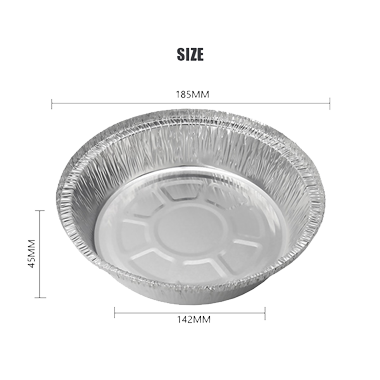
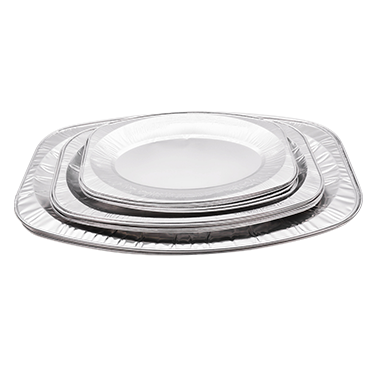
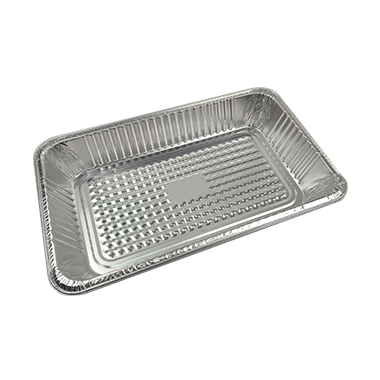
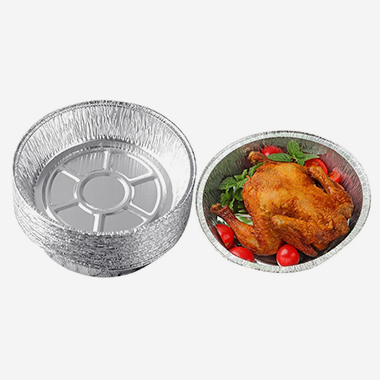
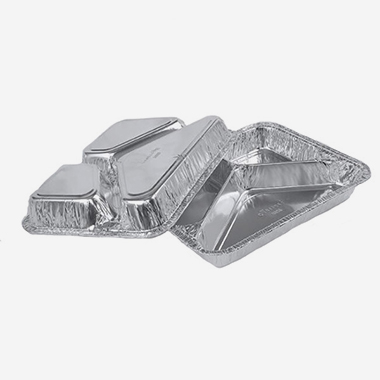
Aluminum foil containers are available in many sizes, shapes, and depths. A manufacturer should have a suitable range of standard molds or be able to develop a customized solution when necessary.
Before ordering, confirm the following specifications:
The right size depends on the food portion, filling method, storage conditions, heating requirements, and target market. A supplier should be able to recommend a suitable standard size when the buyer does not already have a fixed specification.
Standard aluminum foil containers are usually the most practical choice for buyers starting a new product line because existing molds can reduce development time and tooling costs.
However, distributors and food brands may sometimes require a specific size, shape, capacity, compartment configuration, or rim design. In these cases, the manufacturer's mold development capability becomes important.
When discussing a custom container, ask the manufacturer:
A manufacturer with in-house or closely controlled mold development can usually communicate more efficiently between product design, sampling, and mass production.
One good sample does not necessarily mean that every future shipment will have the same quality. For B2B buyers, consistency across production batches is often more important than the appearance of a single sample.
Ask how the manufacturer controls:
It is also useful to understand whether inspections are performed during production and before shipment. Clear quality-control procedures can reduce the risk of receiving inconsistent products in large orders.
Minimum order quantity is another important factor when choosing an aluminum foil container manufacturer.
A supplier may have different MOQs for standard products, customized products, printed packaging, and new molds. Buyers should therefore confirm the MOQ for their specific requirements rather than relying on a general number.
At the same time, MOQ should not be considered separately from production capacity. A supplier may accept a small trial order but struggle to maintain regular supply when your sales volume increases.
For long-term B2B sourcing, ask about both:
This helps buyers determine whether the manufacturer can support future growth.
Importers and distributors often need more than the container itself. They may require custom cartons, labels, product printing, different pack quantities, or private-label packaging.
Before selecting a manufacturer, confirm whether it can support your packaging requirements, including:
Using one supplier for both the aluminum foil containers and related packaging can simplify communication and reduce coordination between multiple factories.
Aluminum foil containers are lightweight but can be easily deformed if they are not properly packed and handled during transportation. Export packaging should therefore be considered before placing a large order.
Ask the manufacturer how the containers are stacked, protected, packed into cartons, and loaded for international shipment.
For distributors and importers, it is also useful to confirm whether the manufacturer regularly handles export orders and understands the documentation and packaging requirements of international shipments.
Requesting samples before a large order is one of the simplest ways to evaluate a potential supplier.
Instead of checking only the appearance, buyers should test the sample against their actual application. Depending on the product, this may include checking the container dimensions, capacity, lid fit, stacking, filling, heating performance, and compatibility with the buyer's packaging process.
If you already have a container from another supplier, sending the existing sample to the manufacturer can also make it easier to compare dimensions and develop an equivalent or customized product.
Both manufacturers and trading companies can be useful for international buyers, but they offer different advantages.
A direct manufacturer may provide better control over production, customization, quality consistency, and communication about technical specifications. This can be particularly useful when aluminum foil containers are a core product in your business.
A trading company may offer a broader range of unrelated products or help buyers consolidate products from several factories. This can be convenient for buyers looking for mixed sourcing solutions.
For buyers planning regular orders of aluminum foil containers, however, it is worth understanding whether the company you are purchasing from is the actual manufacturer or an intermediary. This can help you evaluate production capability, customization options, and long-term supply stability more accurately.
Before requesting a quotation, prepare a clear list of questions. This makes it easier to compare different suppliers on the same basis.
The more specific the buyer's requirements are, the easier it becomes for a manufacturer to recommend a suitable product and provide an accurate quotation.
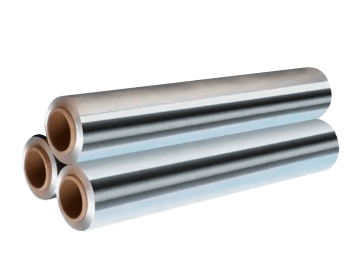
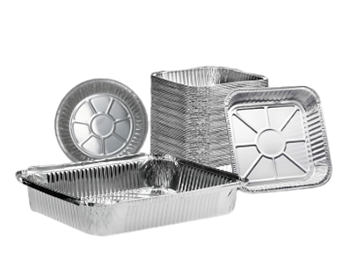
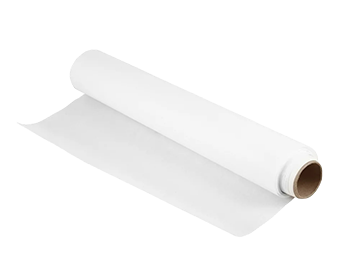
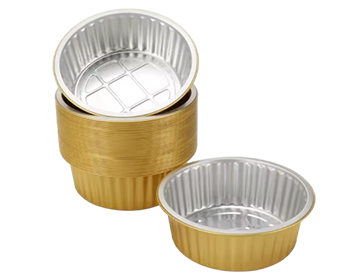
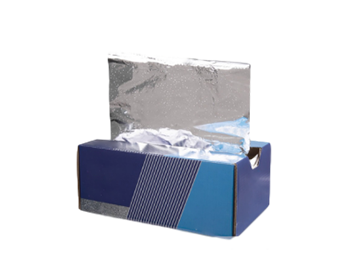
Eming is a China-based manufacturer and supplier of aluminum foil products, including aluminum foil containers, aluminum foil rolls, baking paper, and related food packaging products.
For aluminum foil container buyers, Eming provides standard container options as well as OEM and customized solutions. Buyers can discuss product specifications, packaging requirements, samples, and other project details directly with the manufacturer.
Eming's aluminum foil container product range is designed for applications including food packaging, catering, takeaway, baking, and wholesale distribution. The company can also provide relevant certifications and test documentation according to product and market requirements.
For buyers evaluating a new supplier, the best approach is to share the required container size, quantity, intended application, destination market, packaging requirements, and any customization needs. This allows the manufacturer to recommend a suitable solution and prepare a more accurate quotation.
The main factors include material quality, food-contact compliance, product specifications, quality control, production capacity, MOQ, customization capability, packaging, and export experience. Buyers should compare suppliers using the same criteria rather than looking at price alone.
Ask for company information, product specifications, relevant certifications, samples, quality-control information, and export documentation where applicable. A factory audit or video inspection can also provide additional information when the order value is significant.
Many manufacturers can develop custom molds for specific container sizes, shapes, depths, or compartment designs. Buyers should confirm mold fees, development time, sample approval procedures, and mold ownership before starting a customized project.
The required documentation depends on the destination market and intended use. Buyers should ask for the food-contact compliance documents and test reports applicable to their target market and product specifications.
There is no universal MOQ because it depends on the manufacturer, product size, packaging method, customization requirements, and whether a new mold is needed. Standard products generally have different order requirements from customized products, so buyers should request a product-specific MOQ.
.png)